Globular cluster
M13 Hercules Cluster with a Seestar S50
The raw stack on the left, auto-stretched; the image Stelora finished from it on the right. Drag to compare.
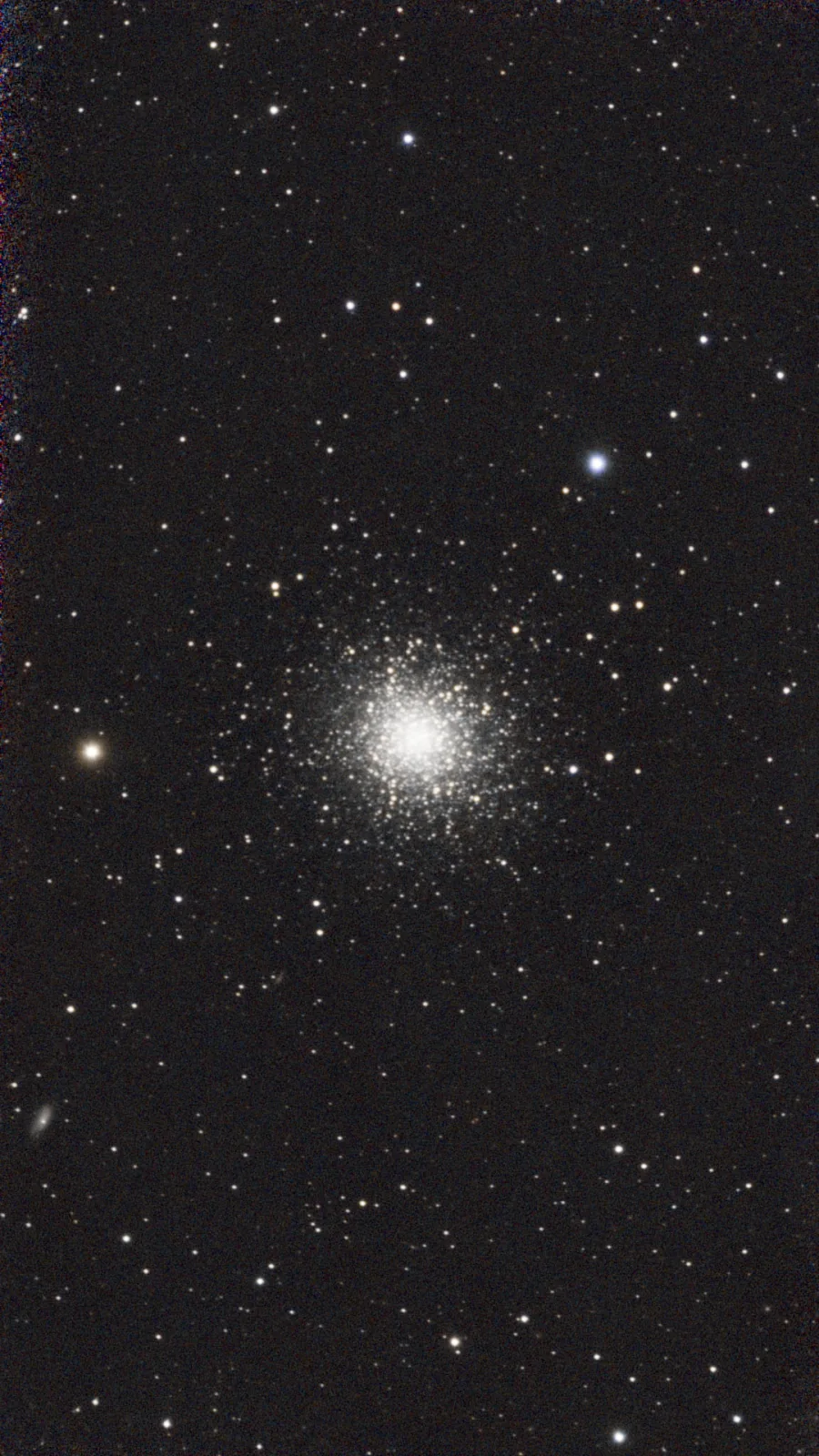
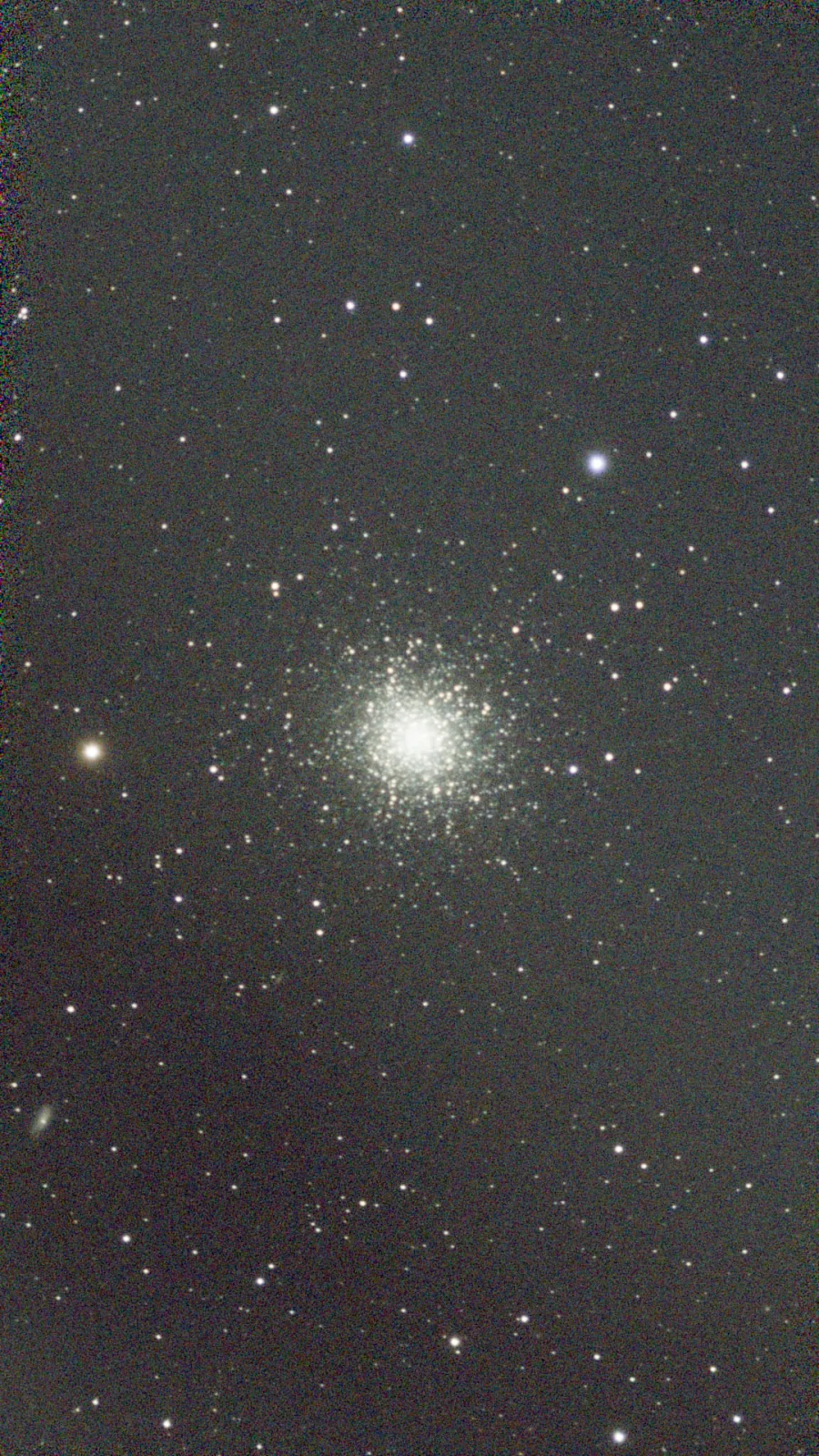 Raw, auto-stretched Finished
 - Telescope
- Seestar S50
- Frames
- 40 × 10 s
- Total integration
- 7 min
- Stacking
- Raw subs, stacked by Stelora
- Processed with
- Pipeline 0.10.0
- Data
- AbdurAstro (free Seestar practice data)
About M13
The Hercules Cluster is a globular cluster: several hundred thousand old stars in a ball about 145 light-years across, some 22,000 to 25,000 light-years away. At magnitude 5.8 it is just visible to the eye under a dark sky, between Eta and Zeta Herculis in the Keystone.
It is best on late spring and summer evenings in the northern hemisphere, when it passes high overhead from mid-northern latitudes. From far south it stays low.
It is starlight, not glowing gas, so it is shot with the Seestar’s normal UV/IR-cut filter rather than the light-pollution filter. The hard part is the core: thousands of stars packed into a few arcminutes merge into one white blob if the stretch is too strong. It is bright, so even a short session like this one gives a usable image.
Not sure where the file is? Where your Seestar or Dwarf 3 saves its FITS files.